

Handlebar height is one of the most influential adjustments on a bicycle. It directly affects comfort, control, breathing efficiency, and long-term sustainability on the bike.
A handlebar that is too low or too high can cause discomfort, reduce control, and limit your ability to ride efficiently—even if the rest of the bike fit numbers are correct.
In this article, we explain how handlebar height affects your riding, how to adjust it properly, and why flexibility plays a key role in finding the right height.
🚴♂️ What Is Handlebar Height?
Handlebar height refers to the vertical distance between the bottom bracket and the handlebar.
It determines how aggressive or upright your riding position is.
This measurement influences:
- Upper-body posture
- Weight distribution between saddle and hands
- Breathing efficiency
- Neck, shoulder, and lower-back comfort
🔎 How Handlebar Height Affects Your Riding
✔ Lower handlebar position
A lower handlebar:
- Creates a more aerodynamic posture
- Increases weight on the hands and arms
- Requires greater flexibility in the hips, hamstrings, and lower back
- Is common in racing and performance-oriented setups
If set too low, it can cause:
- Neck and shoulder pain
- Hand numbness
- Lower-back strain
✔ Higher handlebar position
A higher handlebar:
- Promotes a more upright posture
- Reduces pressure on hands and shoulders
- Improves comfort on long rides
- Is common for endurance, gravel, MTB, and recreational riding
If set too high, it can:
- Reduce front-wheel control
- Make climbing less efficient
- Feel unstable at high speeds
🧠 Flexibility Matters
Handlebar height depends in part on your flexibility.
The height shown in a bike fit or fitting tool represents an ideal target, but your body may need time to adapt.
👉 Important guideline:
- If your current handlebar height differs by more than 1 cm, do not change it all at once.
- Adjust the height in 1 cm increments.
- Ride for several sessions and evaluate comfort before making further changes.
Your goal is to reach the height that best suits your body, riding style, and comfort, not just a theoretical number.
🧰 How to Change Handlebar Height
There are several ways to adjust handlebar height, depending on your bike and components.
🔧 1. Using headset spacers
Spacers are the easiest and most common way to adjust height.
✔ Moving spacers below the stem raises the handlebar
✔ Moving spacers above the stem lowers the handlebar
Most bikes allow a few centimeters of adjustment this way.
⚠️ Important:
- Always respect the manufacturer’s minimum and maximum spacer limits.
- Never exceed the maximum steerer tube extension.
🔧 2. Changing the stem angle (flipping the stem)
Most stems have a positive or negative angle (e.g., ±6°, ±7°, ±10°).
✔ Flipping the stem to a positive angle raises the handlebar
✔ Flipping the stem to a negative angle lowers the handlebar
This adjustment can change handlebar height by 1–3 cm, depending on stem length and angle.
💡 Tip:
Flipping the stem is a simple and reversible way to fine-tune height before replacing components.
🔧 3. Replacing the stem
If spacers and stem angle are not enough, changing the stem may be necessary.
You can adjust:
- Stem angle (higher or lower rise)
- Stem length (which also affects reach)
⚠️ Keep in mind:
- Changing stem length affects steering and weight distribution.
- Height and reach should always be adjusted together when possible.
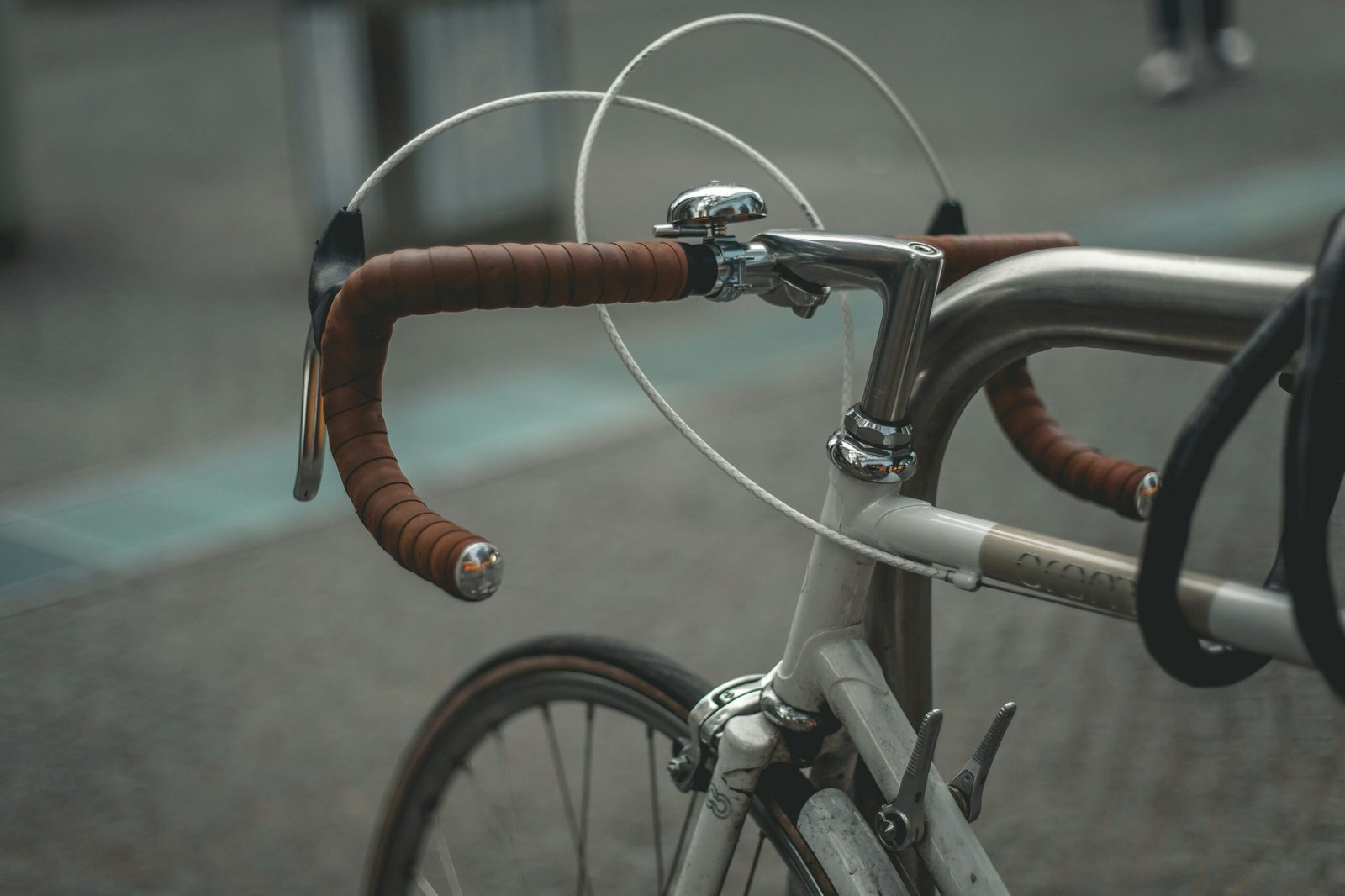
🔧 4. Handlebar shape and rise
Some handlebars have:
- Built-in rise
- Different drop depths
- Different reach dimensions
These factors also influence effective handlebar height and comfort.
📌 How to Know If Your Handlebar Height Is Correct
Your handlebar height is likely correct if:
- You can ride comfortably for long periods
- There is no excessive pressure on your hands
- Your neck and shoulders stay relaxed
- You can maintain the position without constantly readjusting
Discomfort in the upper body is often a sign that the handlebar height needs adjustment.
🏁 Final Thoughts
Handlebar height is not a fixed number—it is a balance between flexibility, comfort, control, and performance.
Remember:
- The recommended height is an ideal reference, not an obligation
- If your current setup differs by more than 1 cm, adjust gradually
- Use spacers and stem angle before changing components
- Seek the position that best suits your body and your riding style