


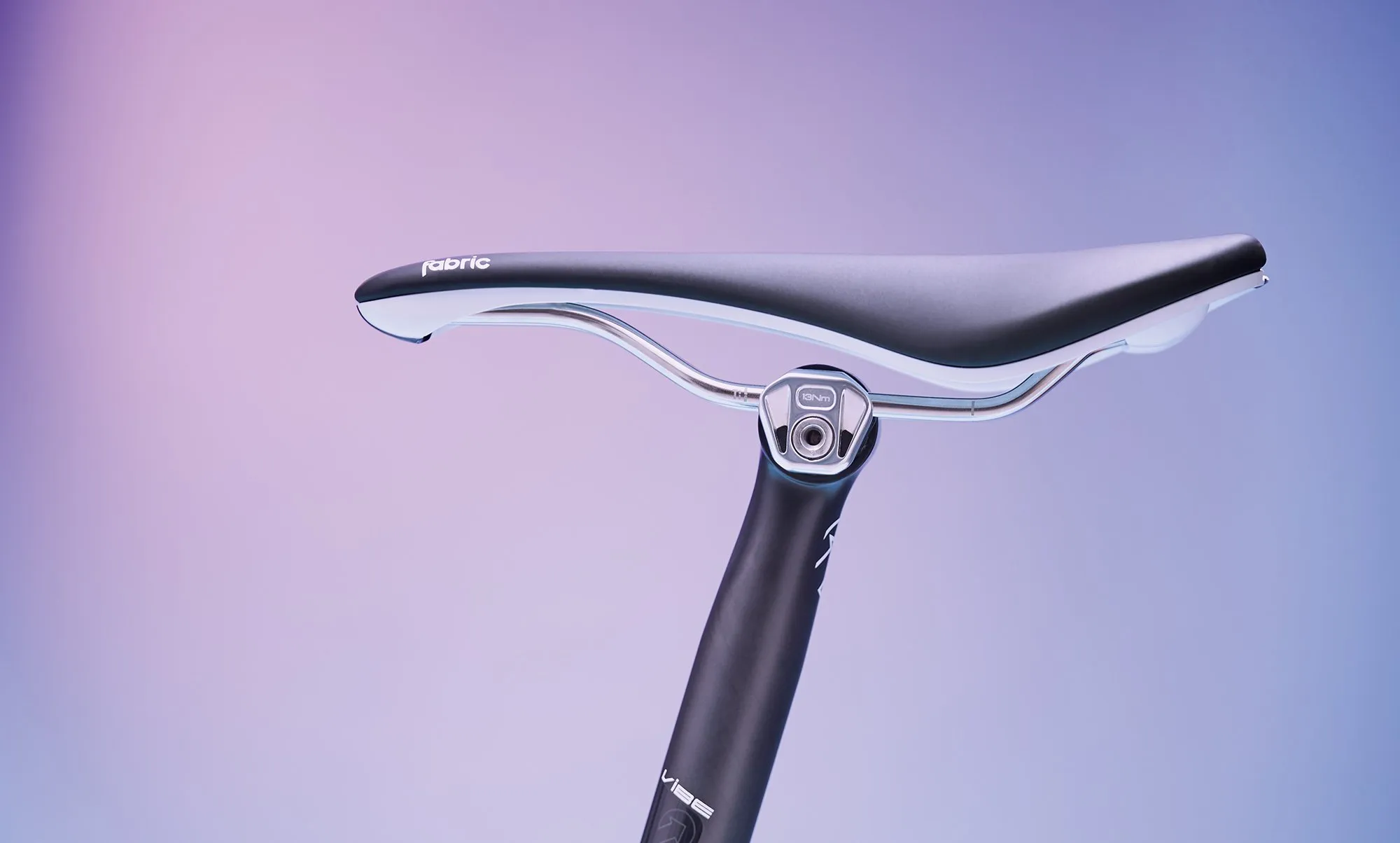
Saddle position is one of the most important adjustments on any bike. Many riders focus only on saddle height, but saddle leveling —the angle of the saddle— has a direct impact on your comfort, performance, and long-term health.
A poorly leveled saddle can cause pain, numbness, loss of power, and even injuries over time.
In this guide, you’ll learn why having a properly leveled saddle is essential and how to level it correctly, including tips for saddles with unique shapes.
🚴♂️ Why Is It So Important to Have Your Saddle Leveled?
✔ 1. Prevents discomfort and numbness
A saddle tilted downward forces your body to slide forward, increasing pressure on your hands, wrists, and arms.
A saddle tilted upward increases pressure on the perineal area, leading to pain or numbness on longer rides.
✔ 2. Improves pelvic stability
Your pelvis must stay stable for efficient pedaling.
If the saddle isn’t level, the pelvis tilts, causing imbalance, back pain, or tight hamstrings.
✔ 3. Boosts pedaling efficiency
A well-leveled saddle keeps your posture neutral, allowing proper power transfer to the pedals.
If you’re constantly sliding or correcting your position, you waste energy and lose rhythm.
✔ 4. Helps prevent injuries
Poor leveling can cause:
- Knee overload
- Lower-back pain
- Shoulder and neck tension
- Nerve or blood flow compression
🧰 How to Level a Bike Saddle Correctly
👉 The saddle should be level across the functional seating surface.
But since saddles come in different shapes, you should not always measure from nose to tail.
✔ Step 1: Place the bike on a perfectly flat surface
Otherwise, your readings will be off.
✔ Step 2: Use a proper leveling tool
A digital inclinometer, bubble level, or phone app works well.
✔ Step 3: Identify the saddle’s functional support area
Modern saddles often have:
- A curved profile
- Short noses
- Cut-outs
- Wave shapes
👉 So you should place the level on the mid-section, where the pelvis actually rests — not on the nose.
✔ Step 4: Adjust the angle
Place the level from the middle toward the front third of the saddle.
Aim for:
- Road: 0° to –1°
- MTB: 0°
- Gravel: 0° to –0.5°
- Triathlon: up to –2°
🚨 Saddles With Special Shapes: How to Level Them
Different saddle designs require different reference points:
✔ Short “Power-style” saddles
Level from the flat sit-bone platform.
✔ Wave-shaped saddles
Level the central zone, not the raised rear.
✔ Downward-nose saddles
The nose is not the reference point; the design may drop intentionally.
✔ Cut-out saddles
Place the level parallel across both sides of the saddle.
⚠️ Not All Seatposts Allow Proper Saddle Leveling
Here’s something many cyclists don’t realize:
Some seatpost designs simply don’t allow fine or correct saddle angle adjustments.
This means even if you want to level your saddle properly, the hardware might limit you. Problems include:
✔ 1. Limited adjustment range
Some seatposts only allow a few degrees of tilt—often not enough for modern saddle shapes.
✔ 2. One-bolt saddle clamps
These are common but imprecise.
A single bolt makes:
- Micro-adjustments difficult
- The saddle more likely to slip over time
- The angle “jump” between positions instead of adjusting smoothly
✔ 3. Offset and clamp design
Some clamps grip the rails in a way that forces the saddle into a fixed angle range.
This is especially problematic with:
- Short-nose saddles
- Saddles with curved rails
- Carbon-railed saddles
✔ 4. Incompatibility with certain saddles
Some saddles (especially short power saddles or very curved models) require more tilt control than certain seatposts can offer.
💡 Tip:
If your saddle constantly feels wrong no matter how much you adjust, the problem might not be the saddle — it could be your seatpost.
Upgrading to a seatpost with:
- Dual-bolt micro-adjustment, or
- Independent tilt and fore-aft controls can solve the issue completely.
📌 How to Know If Your Saddle Is Correctly Leveled
After adjusting:
- You no longer slide forward
- Your hands feel less pressure
- There’s no perineal numbness
- Your pelvis stays stable while pedaling
If all these are true, your saddle is properly set.
🏁 Final Thoughts
Saddle leveling is a small adjustment with a huge impact on comfort and performance.
But the shape of your saddle — and even the design of your seatpost — plays a crucial role in achieving the correct angle.
To ride comfortably and avoid injuries:
- Level the saddle from the functional seating area, not the nose
- Use the right tools
- Make sure your seatpost allows precise angle control
A properly leveled saddle means better power, more comfort, and longer, happier rides.